

The PHDermatology Geriatric Skin Health Clinic was created for patients 85 and older who deserve dermatologic care that takes their complete health picture into account. Older skin does not exist in isolation — it is shaped by a lifetime of sun exposure, medications, chronic conditions, and the natural changes that come with age. Our clinic recognizes this from the first visit.
Rather than defaulting to intervention, this program takes a measured approach — one that weighs the value of any procedure against the realities of healing, comorbidities, and what matters most to each patient. Where watchful monitoring is appropriate, we provide it with structure and diligence. Where treatment is warranted, we select the approach that fits the patient’s life, not just the lesion.
Patients who have felt overwhelmed by repeated biopsies or procedures are especially welcome here. We believe keeping patients engaged in their skin health is more important than any single clinical decision.
Every clinical decision is weighed against the patient's healing capacity, comorbidity burden, and expressed preferences. Intervention is not the default — it is one of many options on the table.

For patients who prefer to monitor rather than treat, we offer photographic surveillance programs with clear, defined thresholds — keeping patients engaged in their care, not pushing them away from it.

After every visit, your primary care physician receives a concise, clinically relevant summary — not a templated note. We are partners in your ongoing care, not a disconnected specialist.
Age-related changes in wound healing, vascular health, and immune function are not afterthoughts — they are built into every procedural decision, from whether to proceed to how we follow up.
We review anticoagulants, immunosuppressants, and photosensitizers as a standard part of every intake — because your medication list is as important as the lesion we're evaluating.

Patients who have experienced "cancer fatigue" — a sense of being over-treated or repeatedly alarmed — will find a practice that listens, documents preferences carefully, and builds care plans around goals, not protocols.
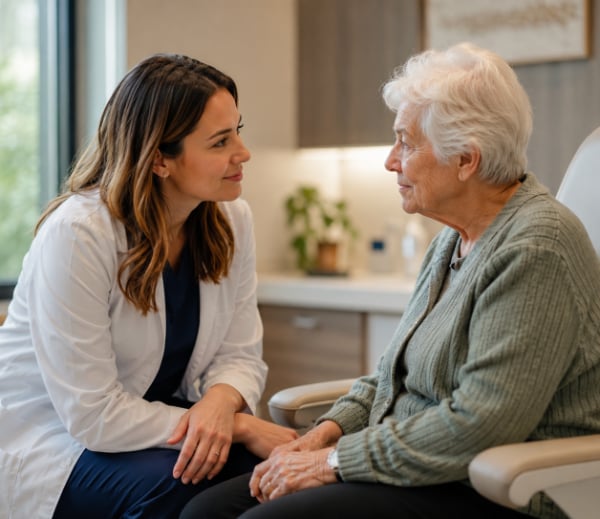
A focused visit to understand your skin history, current concerns, medications, and goals. We take time to listen before we make any recommendations.
Whether that means treatment, structured monitoring, topical management, or a referral to our High-Risk Skin Cancer Clinic — your plan is built around you.
We coordinate with your primary care physician and follow up at intervals that make sense for your situation — not a one-size-fits-all schedule.
Our clinic evaluates and manages a wide range of skin concerns common in older adults, always in the context of overall health.

Patients identified as high-risk for aggressive skin cancer will be recommended for evaluation through the Tampa Bay High-Risk Skin Cancer Clinic.
Our clinical model reflects the reality that elderly patients are not simply older versions of younger patients — they require a fundamentally different framework for care.
Evaluation of skin findings in the full context of the patient's health — medications, comorbidities, functional status, healing history, and personal goals of care.
Treatment decisions calibrated to what will genuinely benefit the patient — including the explicit choice not to intervene when monitoring or non-procedural management is more appropriate.
Patients with findings that warrant a higher level of care are referred to the High-Risk Skin Cancer Clinic, where specialized surveillance and intervention resources are available.
Proactive communication with primary care physicians and a structured follow-up model designed to keep patients connected to their skin health over the long term.
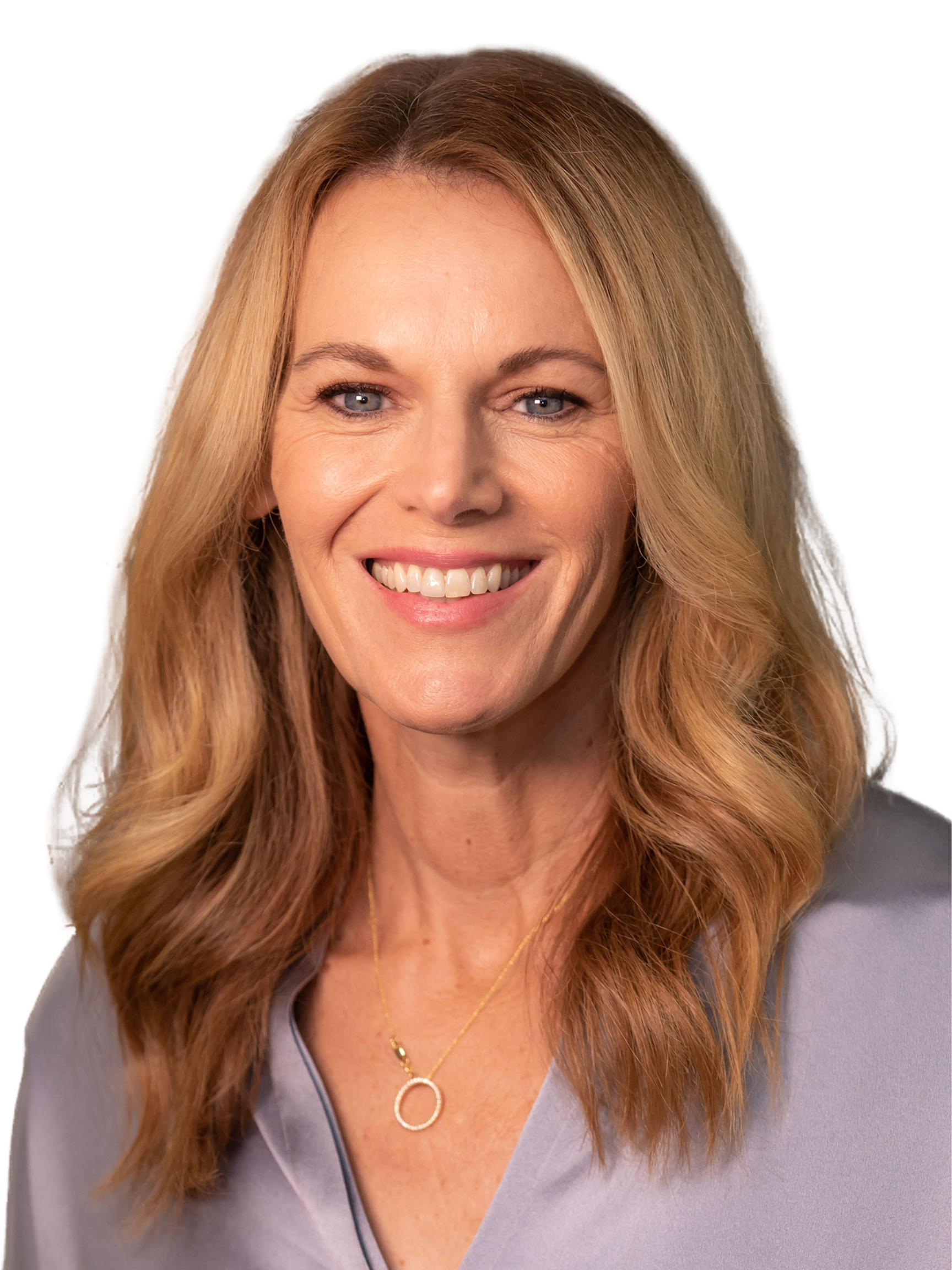
Dr. Ross developed the Geriatric Skin Health Clinic from a conviction she has carried throughout her career: that older patients deserve dermatology that listens first. With extensive experience in complex skin cancer management and a clinical background that includes a multidisciplinary transplant dermatology environment at Vanderbilt University Medical Center, Dr. Ross brings a systems-level perspective to every patient encounter.
Her approach to geriatric skin health reflects the same philosophy that guides the High-Risk Skin Cancer Clinic — careful risk stratification, evidence-based decision-making, and a deep respect for patient autonomy. She understands that for many elderly patients, the question is not simply “what is this lesion?” but “what is the right thing to do for this person, right now?”
As Medical Director of PHDermatology and a member of the International Immunosuppression & Transplant Skin Cancer Collaborative, Dr. Ross brings both clinical depth and a commitment to ongoing learning to her geriatric patients — many of whom have complex immune or medication profiles that require that exact combination.
Concise, actionable notes back to referring physicians after every visit
Medication reconciliation and comorbidity review built into intake
Shared decision-making documented — you'll know what your patient was told and what they chose
Clear triage pathway: patients needing more intensive surveillance are referred to the High-Risk Skin Cancer Clinic
We will not alarm your patients unnecessarily, and we will keep them coming back
Request an evaluation at our Palm Harbor or SOHO Tampa locations for compassionate, whole-person dermatologic care for patients 85 and older.
Request a consultation with Dr. Ross. If patient meets initial qualifications, we will contact you to finalize any additional details.